CARBONCURE
Turning concrete into carbon storage
CarbonCure has pioneered a technology that injects captured CO2 into fresh concrete, where it mineralizes permanently. The result is stronger concrete, less cement, and a lower carbon footprint for the world's most used building material. Its systems now operate at concrete plants across the globe.
Founded in 2007 in Halifax, Nova Scotia, CarbonCure is backed by Amazon, Microsoft, and Breakthrough Energy, and won the NRG COSIA Carbon XPRIZE. The technology had proof, capital, and recognition. What it needed next was a way to sell into one of the world's most conservative industries.
One platform, stackable by design
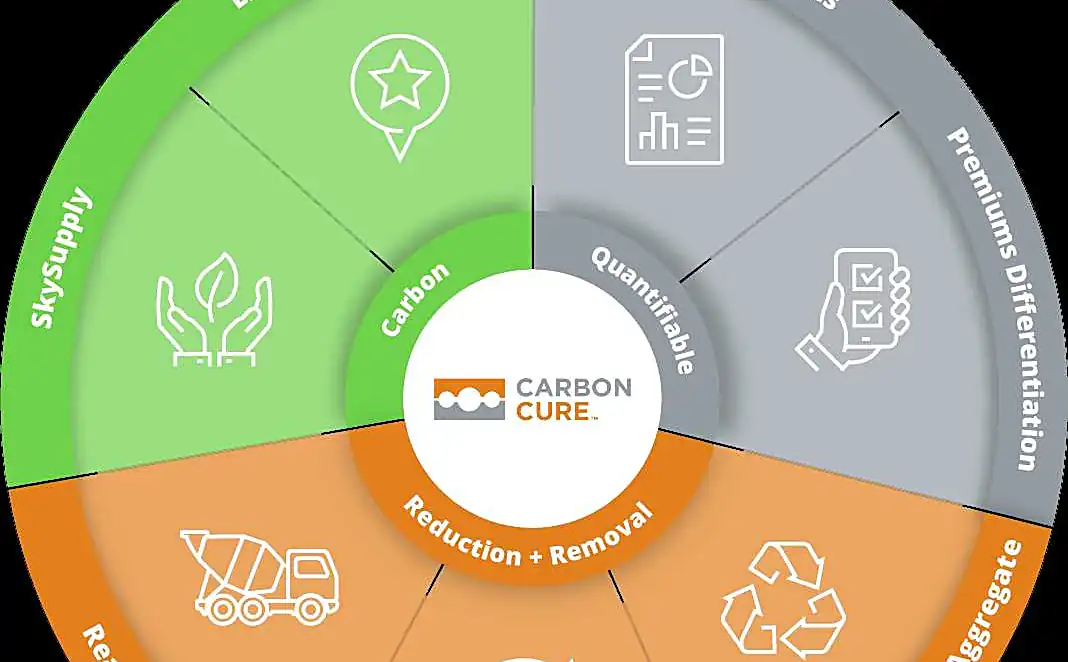
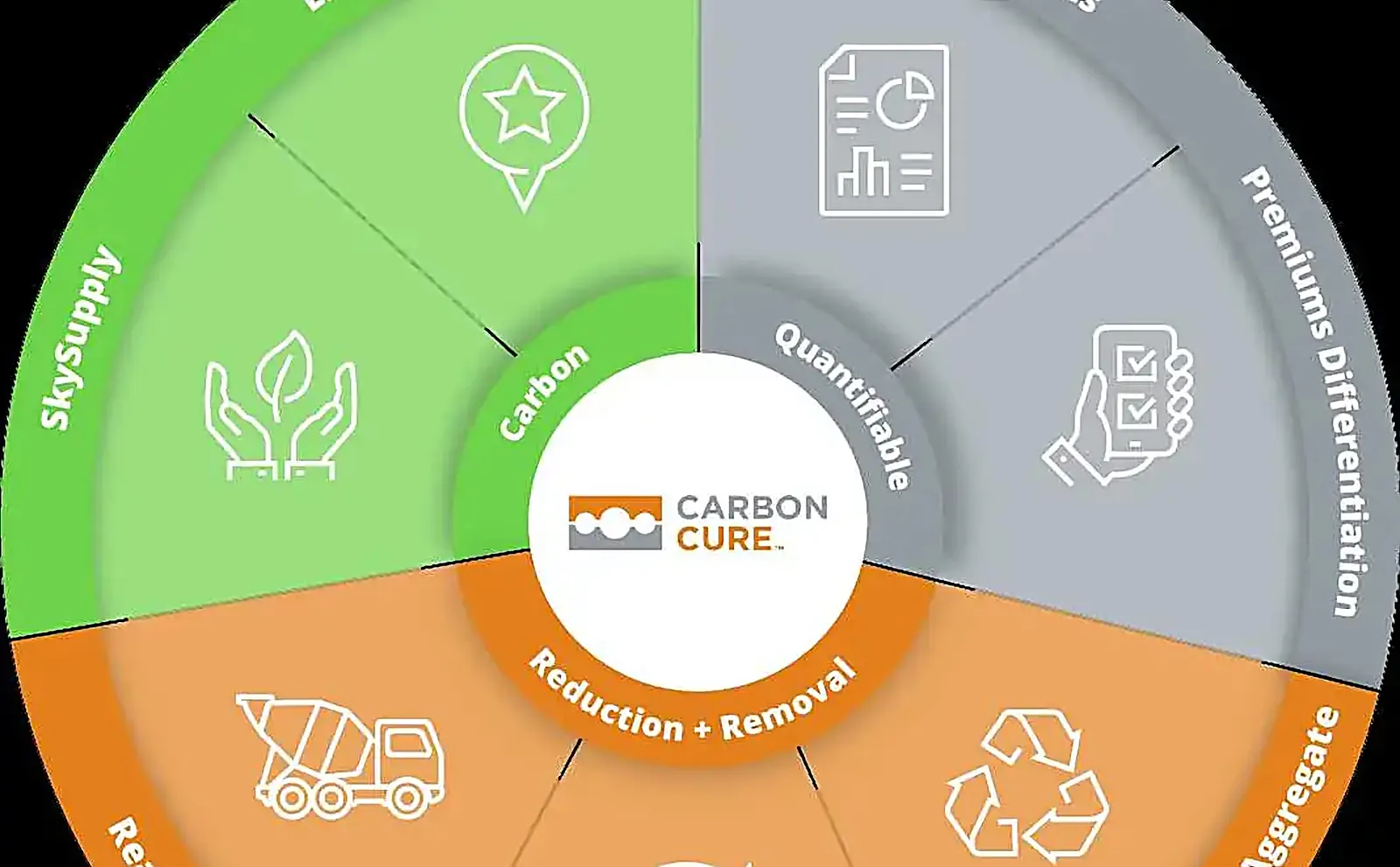
CarbonCure is not a single product. It is a suite of solutions that concrete producers can adopt one at a time or all at once, each one adding measurable carbon reduction and quantifiable enterprise value. From Ready Mix, the hero solution, to Reclaimed Water, Recycled Concrete Aggregate, and SkySupply, every layer runs on the same platform and the same data. That flexibility is the strength, and the sales challenge.
Selling change to an industry built to resist it
CarbonCure had already won over the early adopters. The harder task was expanding adoption across a sophisticated, risk-averse concrete industry, and upselling proven customers on the rest of the platform. Construction is built to resist change. New technology reads as new risk, added workload, and quality-control questions.
The sale itself was long and crowded. CarbonCure's benchmarks put the buyer at 189.70 days from lead to opportunity and 330.71 days from lead to close, with no single decision-maker. Mix designers, sales, legal, and the C-suite all had to say yes.
One document, six sections deep
Ruckus was brought in to diagnose the marketing and sales funnel end to end, find where deals stall, and hand CarbonCure a strategy its lean team could actually run. The strategy shipped in January 2024 as a single 75-page document, the Sales Conversion & Mechanics Strategy, moving from baseline hypothesis through positioning, segmentation, and content to actionable next steps.
The Conversion Mechanics Chart mapped the full funnel as one system, six stages from lead generation through retention and advocacy, with retargeting closing the loop, so every stage could be tied to the content and tools needed to move a prospect forward, and every gap could be seen.
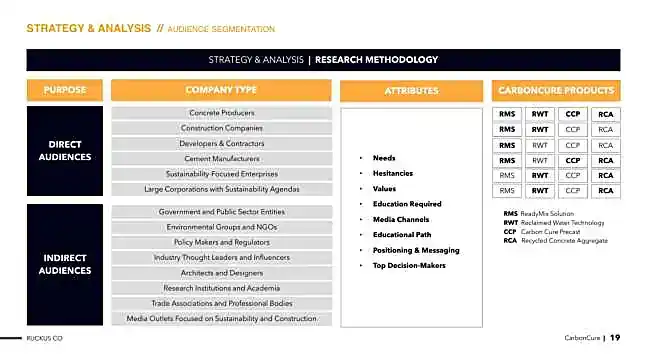
Audience segmentation separated the market into 14 audiences: six direct buyers, from concrete producers to sustainability-focused enterprises, and eight indirect influencers, from policy makers to trade associations and media, so indirect voices could apply downward pressure on the buyers who matter most.
A go to market engine for selling carbon removal
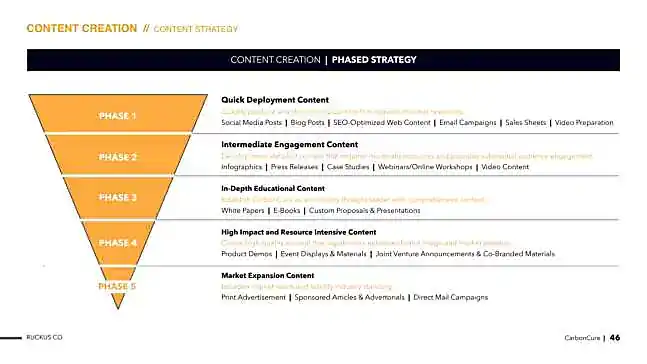
Messaging was built on CarbonCure's dual advantage, speaking to the bottom line and the planet at once, in language the concrete industry actually uses. A five-phase content engine sequenced the work from quick-deployment social posts and sales sheets to white papers and market-expansion print, so a small team could start fast and build authority over time.
Every recommendation ships with working pages: research matrices scoring all 14 audiences against needs and hesitancies, phased rollout plans, and a format-by-audience matrix mapping seven video types to the segments they move. CarbonCure's sales and marketing team can run the playbook without an agency on call.